I just had a conversation about reading in the school parking lot with a friend of mine. She was saying how much she prefers light novels over the heavy stuff. She has to deal with heavy stuff in everyday life, and she just likes a fluffy novel to immerse in. Naturally, I whipped out copies of my books for her as loaners and (since I couldn't resist) gave her my philosophy on cotton candy, how much we just need an escape.
This morning a different friend called. She is working on the "black moment" in her novel. She is trying to make the awful part at the 85% mark much more wrenching. But she likes things nice for her characters (she says today, but I know she does make them suffer!) so it's hard to get the black moment black enough. We talked about figuring out what her character values most of all (her marriage and family) and putting that on the chopping block for the character--upping the stakes, making it really dangerously close to possibly being lost to the character.
My friend was saying how hard it is for her to get down and write the angry feelings or the pain or the fear. I agree. It's tough!
A few months ago I was reading a book about how to do that. (I wish I could remember which one it was. When I do, I'll post a link.) The author suggested mining our own experiences for times of deep emotion. Think back on times of each different kind of emotion: pain, suffering, embarrassment, grief, anger, hatred, longing, love, fear, fear of loss, disappointment, anything.
Think of times when we've felt that. For instance, the sorrow I felt when my grandma died, or the embarrassment of when (okay, too many to choose from). Then, we can list these times and beside them make a list of what representative emotion they connect to. Make a catalog of those emotion packed moments or experiences, relive them in our minds.
In this way, we mine our own experiences for emotion.
Now, the point the author (bless his heart whoever he was) made was that we don't have to put our character into the same situations we were in. We don't have to make all our stories autobiographical. However, we can draw on those experiences and transfuse the emotion of our own moments into the character's moment.
So, what does all this have to do with cotton candy? We read to escape our own real moments of emotion. Instead, we trade them for the emotion of fictional characters. Sometimes "a change is as good as a rest," and so as we read, we feel the pain or sorrow or anger of someone else, and it's a relief, a release, a cotton candy moment. It melts into our reading souls and can help us forget our own troubles and root for someone else for a change.
Now, I need something salty for a change. I recently heard about a new product: Baconnaise. The makers say their goal is to make everything taste like bacon. Mmm. Sweet is yummy, but salt ... it's the spice of life. Am I right?
Thursday, September 30, 2010
Sunday, September 26, 2010
Unforgivable Broccoli in the Teeth
I just found out that Nicholas Cage is...Francis Ford Coppola's son? And Sophia Coppola's brother. How could I not know that?
Also, how could I not have known that there was a little green broccoli bud between my two front teeth when I went to that important political meeting the other night to meet big wigs from the state party and when I was sitting on the front row of the meeting smiling through the whole thing? How?
These things are just not acceptable.
If I'd skipped the broccoli and just gone with candy for dinner like I wanted to--stuffed my mouth with Red Vines (sounds like it's based on a plant food) and Sour Patch Kids (vegetables grow in a patch, right?) instead of that healthy stuff, I might never have caused myself to suffer the embarrassment. And now I can't even remember if embarrassment has one or two r's in it.
What is forgivable, however, is an imperfect first draft. I think a lot of us authors get done with a first draft and voila! we think it's a finished product and we get all excited and show it to all our friends and family and writing group pals. Then, a few weeks or months go by and ... shoot. It doesn't look so great. The fervor for its glory cools significantly. Freezes over, in fact. We approach it with new eyes and we're horrified. Much like my glance in the mirror after returning home from the Marriott meeting with bigwigs.
However, we have to remember that first drafts are just that: first drafts. First implies that other drafts follow. Like second, third, fourth drafts. I like what James A. Michener said, "I'm not a very good writer, but I'm an excellent rewriter." We don't have to be geniuses in the first place. We just need to get the clay onto the pottery wheel so we can begin to mold it.
And how many metaphors can I fit into a single blog post? Going for a new record, I guess.
But what I'm saying is I hated seeing my imperfections of teeth (and knowledge) as much as I hate seeing first drafts' imperfections. But once that initial shock of horror passes, we need to let that subside and we can begin to look for the good things in the story and start to work from there molding it into something greater than we initially formed--make it take a shape closer to our original vision, perhaps.
But still. How could Nicholas Cage have been that guy and I not know it?
Also, how could I not have known that there was a little green broccoli bud between my two front teeth when I went to that important political meeting the other night to meet big wigs from the state party and when I was sitting on the front row of the meeting smiling through the whole thing? How?
These things are just not acceptable.
If I'd skipped the broccoli and just gone with candy for dinner like I wanted to--stuffed my mouth with Red Vines (sounds like it's based on a plant food) and Sour Patch Kids (vegetables grow in a patch, right?) instead of that healthy stuff, I might never have caused myself to suffer the embarrassment. And now I can't even remember if embarrassment has one or two r's in it.
The Dinner of Champions:
What is forgivable, however, is an imperfect first draft. I think a lot of us authors get done with a first draft and voila! we think it's a finished product and we get all excited and show it to all our friends and family and writing group pals. Then, a few weeks or months go by and ... shoot. It doesn't look so great. The fervor for its glory cools significantly. Freezes over, in fact. We approach it with new eyes and we're horrified. Much like my glance in the mirror after returning home from the Marriott meeting with bigwigs.
However, we have to remember that first drafts are just that: first drafts. First implies that other drafts follow. Like second, third, fourth drafts. I like what James A. Michener said, "I'm not a very good writer, but I'm an excellent rewriter." We don't have to be geniuses in the first place. We just need to get the clay onto the pottery wheel so we can begin to mold it.
And how many metaphors can I fit into a single blog post? Going for a new record, I guess.
But what I'm saying is I hated seeing my imperfections of teeth (and knowledge) as much as I hate seeing first drafts' imperfections. But once that initial shock of horror passes, we need to let that subside and we can begin to look for the good things in the story and start to work from there molding it into something greater than we initially formed--make it take a shape closer to our original vision, perhaps.
But still. How could Nicholas Cage have been that guy and I not know it?
Wednesday, September 22, 2010
Persuasion
In one of my favorite novels, Cold Comfort Farm by Stella Gibbons, the main character Flora Post announces to her friend Mrs. Smiling, "I mean to write a novel as good as Persuasion by the time I'm fifty."
I say that's a pretty lofty goal.
But that phrase tumbled around in my head for so long (like a clothes dryer with no automatic shut off and I left on vacation with a load of towels in) that eventually I took up the challenge. I failed, naturally, but I did write a novel based on Persuasion, arguably Jane Austen's finest work (and the one supposedly most autobiographical.) It pales, but does that count?
Anyhow, I've spent the past three weeks immersed in a new and foreign (to me) form of writing: persuasive.
Given the choice in college, I signed up for the research writing class, not the persuasive writing class. Then when it came to the sales aspects of the technical writing courses I took, I pretty much stunk. Sigh. It's not my forte. But lately, my completely untrained moment has been thrust upon me. I've had to write the text for a brochure, six persuasive letters, a "convincing" post card, an entire website, several radio ads, and three newspaper ads.
Seriously.
It's a tall building to leap in a single bound. I don't know how the end result looks yet. And I won't know if they're effective for a few more weeks. And a LOT depends on it. In fact, I want to kind of hurl whenever I think about how much the success or failure of these chunks of text actually effects my life.
What I do know about persuasive writing is this: know your audience. Know what matters to them. Know what they want most. Suit your message to your reader. Figure out what will appeal to the reader and play on that. It can be based on fear, or deeply held emotions, or money. (Dang it. None of which I tapped into, I realize now.) It can be based on reason--well reasoned arguments (that's what I was going for). It can appeal to desires. (Avoided that one, too.)
Meanwhile, I'm thinking what I really desire is another dose of Tylenol and another dose of that fantastic Cherry Chocolate Ice Cream Bar by my good friends at the Blue Bell ice cream company. Is there more deliciousness anywhere? I think not. Unless it's in the Buttered Pecan Ice Cream Bar (which I have yet to sample. But my birthday is coming up in a few weeks. Hint. Hint.)
Now that's cold comfort.
Monday, September 13, 2010
Name that Tune (er, character)
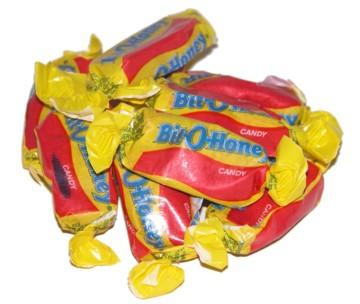
So how could I possibly avoid eating the candy? It was a long-driving road trip. We were listening to Charlie and the Chocolate Factory (it’s Roald Dahl month!), and the song on the radio was “Sugar, Sugar, oh honey honey, you are my candy girl, and you got me wanting you.” I’d been subconsciously prepped, so why not buy a Bit o’ Honey, a Snickers, a Spree, and a pack of Doublemint—and eat them all myself?
Good stuff. I love that honey taffy.
I have a dear friend named Taffy, actually. When I first met her I had to do an audio doubletake. Taffy? Excuse me?
But the better I got to know her the better her name fit her. If anyone ever was appropriately called Taffy it’s she.
I have another friend. She’s completely down to earth. She’s strong. She’s bright. She’s no frills, no pink, no ribbons or bows. She told me that when she was born, her mom (under the influence of post childbirth swirling emotions) wanted to name her Buffy.
Thank heavens her father stepped in and put a stop to that. She has a much more personality-appropriate name.
So, when we name book people, how do we come up with just the right name? I have read books where the whole way through the name of the main character has caused a little “ding” in my mind every time I see it. The name doesn’t fit the character’s age or personality or the time period setting of the book—something.
I find that choosing characters’ names is one of the great tasks. Sometimes the name hits me first, and then the story follows. I suspect The Great Gilly Hopkins. Perhaps Willy Wonka, too (while we’re on the candy subject.)
Other times I know the story, but I don’t know the character’s name for a long time. When I was pregnant with our oldest we bought these great name books—not just long lists of names listed alphabetically, but the listing included the connotation of the name, the way he might be perceived by his peers, whether it was stodgy or cool, solid or fluffy, plus lots of other naming theories. Loved them. The latest update of this series I bought was called The Baby Name Bible.
Between baby birthings (I don’t know nuthin’ about birthin’ no babies!), I found these books to be really helpful in naming the imaginary people in my life. It was great to use them, and an added bonus was if I had a name I adored (Maren, Stan, Bridget) and my husband decidedly did NOT adore that name, it could be slapped on a story person and come to life, even if only on paper.
It’s a tricky business naming a character. It has to fit just right. The character doesn’t have the opportunity to grow up and head over to Social Security and make the change if you don’t get it right the first time. Only the author has the power and responsibility for the perfect fit. That is a hefty burden sometimes.
Sometimes an honest mistake can be made. This is why critique groups are so important. I was proofreading a story by an acquaintance once and the main character’s name was … let’s just say it was offensive. A baddie. Because it was the main character, it was on every page. When I mentioned she might like to rename him, she got a little defensive (we love our story-children), and so I got my husband to explain the meaning to her. She decided to let it go. Whew.
In one of my novels I made the mistake of making two characters’ names sound too closely alike: Jed and Ted. And no, they weren’t twins. It wasn’t until the book had been out almost a year that my neighbor said, “I kept getting them mixed up.” Clutch at my heart! How could I have not noticed such a thing? Ugh!
It’s important, I think, to have names that are memorable. They don’t have to be wacky-out-of-the-realm-of-normality names, but they need to be slightly odd. John Grisham is good at this. I decided a while back I think he skims the phone book and finds some of the weirder names and picks some. I liked the fact that Charlie in the chocolate factory’s last name is Bucket. It’s believable but quite memorable. In farce (like that) the people can be names that describe them (Angina—fat mother of spoiled rich girl, means heart attack; Gloop for the greedy kid; etc.) I have made the mistake of having names be too pedestrian. It helps the reader, (at least when I’m the reader), to have the names be just enough different to be memorable. Think Holden Caulfield, Katniss Everdeen, Harry Potter, Percy Jackson, etc.
Growing up "Jennifer"....I mean, in the '70s almost every girl seemed to be named Jennifer. Or Lisa. It had its pros and its cons.
So, I guess a couple of the things I now watch out for as I’m naming book people is to try not to have any rhyming names, to not have any two names begin with the same letter, and make it memorable.
There’s a poem by Robert Frost about a girl whose parents name her Maple. Not Mabel. It is forever giving her trouble, and then one day it becomes the springboard of a conversation with a man who ends up falling in love with her. The final line of the poem goes something like “Name children some names and see what you do.” Or what happens.
I like that.
Good stuff. I love that honey taffy.
I have a dear friend named Taffy, actually. When I first met her I had to do an audio doubletake. Taffy? Excuse me?
But the better I got to know her the better her name fit her. If anyone ever was appropriately called Taffy it’s she.
I have another friend. She’s completely down to earth. She’s strong. She’s bright. She’s no frills, no pink, no ribbons or bows. She told me that when she was born, her mom (under the influence of post childbirth swirling emotions) wanted to name her Buffy.
Thank heavens her father stepped in and put a stop to that. She has a much more personality-appropriate name.
So, when we name book people, how do we come up with just the right name? I have read books where the whole way through the name of the main character has caused a little “ding” in my mind every time I see it. The name doesn’t fit the character’s age or personality or the time period setting of the book—something.
I find that choosing characters’ names is one of the great tasks. Sometimes the name hits me first, and then the story follows. I suspect The Great Gilly Hopkins. Perhaps Willy Wonka, too (while we’re on the candy subject.)
Other times I know the story, but I don’t know the character’s name for a long time. When I was pregnant with our oldest we bought these great name books—not just long lists of names listed alphabetically, but the listing included the connotation of the name, the way he might be perceived by his peers, whether it was stodgy or cool, solid or fluffy, plus lots of other naming theories. Loved them. The latest update of this series I bought was called The Baby Name Bible.
Between baby birthings (I don’t know nuthin’ about birthin’ no babies!), I found these books to be really helpful in naming the imaginary people in my life. It was great to use them, and an added bonus was if I had a name I adored (Maren, Stan, Bridget) and my husband decidedly did NOT adore that name, it could be slapped on a story person and come to life, even if only on paper.
It’s a tricky business naming a character. It has to fit just right. The character doesn’t have the opportunity to grow up and head over to Social Security and make the change if you don’t get it right the first time. Only the author has the power and responsibility for the perfect fit. That is a hefty burden sometimes.
Sometimes an honest mistake can be made. This is why critique groups are so important. I was proofreading a story by an acquaintance once and the main character’s name was … let’s just say it was offensive. A baddie. Because it was the main character, it was on every page. When I mentioned she might like to rename him, she got a little defensive (we love our story-children), and so I got my husband to explain the meaning to her. She decided to let it go. Whew.
In one of my novels I made the mistake of making two characters’ names sound too closely alike: Jed and Ted. And no, they weren’t twins. It wasn’t until the book had been out almost a year that my neighbor said, “I kept getting them mixed up.” Clutch at my heart! How could I have not noticed such a thing? Ugh!
It’s important, I think, to have names that are memorable. They don’t have to be wacky-out-of-the-realm-of-normality names, but they need to be slightly odd. John Grisham is good at this. I decided a while back I think he skims the phone book and finds some of the weirder names and picks some. I liked the fact that Charlie in the chocolate factory’s last name is Bucket. It’s believable but quite memorable. In farce (like that) the people can be names that describe them (Angina—fat mother of spoiled rich girl, means heart attack; Gloop for the greedy kid; etc.) I have made the mistake of having names be too pedestrian. It helps the reader, (at least when I’m the reader), to have the names be just enough different to be memorable. Think Holden Caulfield, Katniss Everdeen, Harry Potter, Percy Jackson, etc.
Growing up "Jennifer"....I mean, in the '70s almost every girl seemed to be named Jennifer. Or Lisa. It had its pros and its cons.
So, I guess a couple of the things I now watch out for as I’m naming book people is to try not to have any rhyming names, to not have any two names begin with the same letter, and make it memorable.
There’s a poem by Robert Frost about a girl whose parents name her Maple. Not Mabel. It is forever giving her trouble, and then one day it becomes the springboard of a conversation with a man who ends up falling in love with her. The final line of the poem goes something like “Name children some names and see what you do.” Or what happens.
I like that.
Tuesday, August 31, 2010
Griffith: Unplugged
Last Saturday I got to drive a bunch of teenagers to the lake two hours away so they could waterski and wakeboard and get sunburns. The organizers of the trip probably hoped I'd help out, but instead, I did the hermit-writer classic move and hid in my cave (Suburban) and wrote!
It was the first time in I don't know how long that I was on a computer with no Internet access. Can I say how weird and disconnected from all mankind I felt? I'd forgotten. I mean, seriously--deserted island feeling.
But shazam! I got so much more done!
(Imagine that! )
It's been a really busy time around my world, with school ramping up and 2 year old at home with me declaring me as her one and only friend all day long (which I love, but it sure does mean a lot more of my attention gets diverted her way than it did all summer with the other four kiddos home) and other exciting stuff going on that I won't bore y'all with.
Still, I got more done in 4 hours on the shores of Roosevelt Lake in the sweltering car (intermittently plugging my laptop into the battery-jumper-box thingy) than I have in the last three weeks combined. I implemented about 20 edits, added about 10 pages of new writing, got rid of some super lame subplots and scenes, cleaned up some rough patches. Loved it!
Which tells me something. I am lazy? I have ADD? I'm addicted to facebook and email and mindless surfing the net?
Probably. But also, that a little more self control and technological isolation is good for the soul, and the plot, and the productivity levels.
I might try to recreate the circumstances here at home by switching off my modem and putting myself on the desert island again, but on the comfort of my sofa and in the cool whir of the air conditioning with piles of candy at my side.
Oh, wait. The candy might distract me.
Especially a candy that's also a toy. Like PEZ. Or Lik-M-Aid. PEZ is for sharing, I have always believed. What could be better than eating a rectangular disc of strawberry flavored sugar directly from the neck of Batman, or Kermit the Frog, or Princess Leia? Seriously? I wonder if there was a Leif Garrett Pez dispenser in the 1970s. I guess you know you've "arrived" fame-wise when they make a Pez dispenser with a model of your head.
It was the first time in I don't know how long that I was on a computer with no Internet access. Can I say how weird and disconnected from all mankind I felt? I'd forgotten. I mean, seriously--deserted island feeling.
But shazam! I got so much more done!
(Imagine that! )
It's been a really busy time around my world, with school ramping up and 2 year old at home with me declaring me as her one and only friend all day long (which I love, but it sure does mean a lot more of my attention gets diverted her way than it did all summer with the other four kiddos home) and other exciting stuff going on that I won't bore y'all with.
Still, I got more done in 4 hours on the shores of Roosevelt Lake in the sweltering car (intermittently plugging my laptop into the battery-jumper-box thingy) than I have in the last three weeks combined. I implemented about 20 edits, added about 10 pages of new writing, got rid of some super lame subplots and scenes, cleaned up some rough patches. Loved it!
Which tells me something. I am lazy? I have ADD? I'm addicted to facebook and email and mindless surfing the net?
Probably. But also, that a little more self control and technological isolation is good for the soul, and the plot, and the productivity levels.
I might try to recreate the circumstances here at home by switching off my modem and putting myself on the desert island again, but on the comfort of my sofa and in the cool whir of the air conditioning with piles of candy at my side.
Oh, wait. The candy might distract me.
Especially a candy that's also a toy. Like PEZ. Or Lik-M-Aid. PEZ is for sharing, I have always believed. What could be better than eating a rectangular disc of strawberry flavored sugar directly from the neck of Batman, or Kermit the Frog, or Princess Leia? Seriously? I wonder if there was a Leif Garrett Pez dispenser in the 1970s. I guess you know you've "arrived" fame-wise when they make a Pez dispenser with a model of your head. Thursday, August 26, 2010
Chocolate Voodoo Doll
I have been editing the dialogue in my novel, and I was thinking about something I read in James N. Frey's book (mentioned several times in this blog, and now again) about what's important in writing good dialogue.
First off, good dialogue is *not* conversation. There are no "throwaway" lines in dialogue. Every line should advance the plot, reveal character, or heighten conflict.
He says good dialogue is always:
* in conflict
* indirect
* clever
* colorful
His points are that dialogue needs to reveal conflict, reveal character, and to provide immediacy--meaning it speeds up the action of the story, makes it seem like it's happening *now* and not just being told about. Funny, telling through dialogue ends up being one of the best ways to "show not tell."
Frey suggests that in the editing phase, we should go back and reexamine ALL dialogue and determine where it could be fresher, more unexpected, create greater tension, and throw a greater impact. Sigh. It's really hard to do!
I have a favorite TV show, Leverage, and I love it because the dialogue rocks. Everything just strikes me as clever, and it's never what I'm expecting. I'm sure the writers are either geniuses or else they labor for hours and days and weeks coming up with the perfect snappy (or snarky) response.
For instance, Cookie Monster. The name--it's a juxtaposition of ideas. And it's a beloved character who has endured over 30 years in children's and adults' minds.
I think we're kind of like the people the Apostle Paul describes (and kinda scorns) of Mars Hill, always looking about to see something new. It's human nature. We like what surprises us, what's different.
First off, good dialogue is *not* conversation. There are no "throwaway" lines in dialogue. Every line should advance the plot, reveal character, or heighten conflict.
He says good dialogue is always:
* in conflict
* indirect
* clever
* colorful
![]() |
| Here's something colorful. Skittles. Mmm. |
I don't think colorful necessarily means "colorful language" in the cursing sense of the term. I think he means it should create images in the reader's mind, reveal the way the character thinks, and make an impact.
By indirect, Frye explained, if one character asks a question, the reply shouldn't answer it directly. The feeling will be crisper if the answer is oblique or if the answer comes several lines later. This can intensify conflict between characters, as well.
His points are that dialogue needs to reveal conflict, reveal character, and to provide immediacy--meaning it speeds up the action of the story, makes it seem like it's happening *now* and not just being told about. Funny, telling through dialogue ends up being one of the best ways to "show not tell."
Frey suggests that in the editing phase, we should go back and reexamine ALL dialogue and determine where it could be fresher, more unexpected, create greater tension, and throw a greater impact. Sigh. It's really hard to do!
I have a favorite TV show, Leverage, and I love it because the dialogue rocks. Everything just strikes me as clever, and it's never what I'm expecting. I'm sure the writers are either geniuses or else they labor for hours and days and weeks coming up with the perfect snappy (or snarky) response.The thing about all this "unexpectedness" requirement in dialogue is that it also seems to extend to all aspects of writing--to the character development, to the plot twists, to the name assignments of characters, to the titles.
For instance, Cookie Monster. The name--it's a juxtaposition of ideas. And it's a beloved character who has endured over 30 years in children's and adults' minds.
I think we're kind of like the people the Apostle Paul describes (and kinda scorns) of Mars Hill, always looking about to see something new. It's human nature. We like what surprises us, what's different. Now, candy-wise, here's something different. Lobster lollipops. I think I've eaten them before. Cherry flavor? Does that ring a bell? It's dinner time. I'd like one right now, to be honest.
I just love surprises--in candy and in good writing.
Friday, August 20, 2010
Deep Dark Secret...Revealed!
While I was studying up for a presentation I gave at the ANWA Retreat last month, I was reading James Scott Bell's Plot & Structure. This book is by faaaaaaar THE BEST book on fiction writing I have ever come across. I adore it. It changed the way I think about writing, and I am kicking myself for not reading it 10 years earlier. (Okay, it wasn't written then, but, dang it!)
I really like the way Bell suggests setting up a plot--how to mine your psyche and your past for ideas, how to arrange scenes, etc. I am going to post about this more later, but the thing I am thinking about today is one of his sections: The Dark Secret.
One way of creating tension in a story, and of creating exciting and compelling characters is to give them a dark secret--something that could hurt them deeply if it comes to light, or something that could hurt someone they love, something they are trying to achieve (could stand between them and their goal or RULING PASSION), or destroy trust or reputation. They should be utterly desperate to keep the secret hidden. As writers we should consider to what lengths the character will go to prevent it from leaking out.
James N. Frey in that other great book How to Write a Da*n Good Novel insists that "every character should have something to hide." Soap operas are excellent examples of this.
So, last night I was lazing about watching a movie with my husband: Bandslam. I had low expectations for the show, and then bam! About 3/4 of the way through, a dark secret of the by-now-beloved main character comes to light to both the audience and to all his newfound friends. It nearly destroys everything he has worked for thus far and creates major tension up until the final minutes of the showdown in the climax of the show.
Suddenly for me this movie went from formula kid-show to,"Wow, what a cool script. I wish I could concoct something like this."
It's something I think would really help round out one of my characters during this edit. She's great but a little flat. A dark secret would make her much more interesting.
So, in regards to candy, I do have a dark secret in my candy-eating past. For several years in the 1970s, I was a hard core Candy Cigarette fan. (Cue the "dun-dun-dun" music here.)
Yes! It's true! My cousin Matt and I bought them on Saturdays at the Milk Depot for 25 cents. Then we hid under the bridge in the canal and actually pretended we were smoking when we ate them. I savored that pepperminty flavor on the sly and I don't remember telling my mom or dad about it.
I'm so ashamed. I hope you'll all forgive me and know that I've reformed from this anti-social behavior since then.
But, come on! Geez. What kind of jerks made candy cigarettes? That's just shameful, don't you think?
I really like the way Bell suggests setting up a plot--how to mine your psyche and your past for ideas, how to arrange scenes, etc. I am going to post about this more later, but the thing I am thinking about today is one of his sections: The Dark Secret.
One way of creating tension in a story, and of creating exciting and compelling characters is to give them a dark secret--something that could hurt them deeply if it comes to light, or something that could hurt someone they love, something they are trying to achieve (could stand between them and their goal or RULING PASSION), or destroy trust or reputation. They should be utterly desperate to keep the secret hidden. As writers we should consider to what lengths the character will go to prevent it from leaking out.
James N. Frey in that other great book How to Write a Da*n Good Novel insists that "every character should have something to hide." Soap operas are excellent examples of this.
So, last night I was lazing about watching a movie with my husband: Bandslam. I had low expectations for the show, and then bam! About 3/4 of the way through, a dark secret of the by-now-beloved main character comes to light to both the audience and to all his newfound friends. It nearly destroys everything he has worked for thus far and creates major tension up until the final minutes of the showdown in the climax of the show.
Suddenly for me this movie went from formula kid-show to,"Wow, what a cool script. I wish I could concoct something like this."
It's something I think would really help round out one of my characters during this edit. She's great but a little flat. A dark secret would make her much more interesting.
So, in regards to candy, I do have a dark secret in my candy-eating past. For several years in the 1970s, I was a hard core Candy Cigarette fan. (Cue the "dun-dun-dun" music here.)
Yes! It's true! My cousin Matt and I bought them on Saturdays at the Milk Depot for 25 cents. Then we hid under the bridge in the canal and actually pretended we were smoking when we ate them. I savored that pepperminty flavor on the sly and I don't remember telling my mom or dad about it.
I'm so ashamed. I hope you'll all forgive me and know that I've reformed from this anti-social behavior since then.
But, come on! Geez. What kind of jerks made candy cigarettes? That's just shameful, don't you think?
Wednesday, August 18, 2010
Candy Whistle and the Same Old Song
I was trolling through Twitter a few weeks ago and stumbled across someone's home page full of tweets shared among agents and editors in the business. I didn't notice which publishing houses or agencies they worked for, but what I did notice was their string of complaints.
Yes, complaints.
The thing they complained about was other people's writing. Ew. Fer rude. It scared me.
I stared at the words horrified and decided I really don't want to be fodder for Tweets of Terror.
I'd forgotten about it when I posted yesterday, but the complaints related directly to what I was thinking and writing about then: THE RULING PASSION of the main characters in the manuscripts on their desks, and the fact that the passions were not strong enough or focused enough.
Specifically, several groaned about this: Curiosity is NOT a strong enough driving passion.
At the time, I think I felt a sense of relief at that, since my character's passion isn't curiosity, so the relief sent the thoughts out of my mind, but since I've been editing and going over this concern mentally, I can see how this could grow moldy for an agent or assistant editor digging through the slush pile all day.
Which reminds me. I love Slush Puppies. They have really good pebble ice. Give me the blue raspberry. Make the edge of my upper lip and my tongue dark blue.
>Shrug.<
Since I don't have my own Slush Puppie machine here at Griffith Central (yet. Maybe after I sell my bestseller. Ha.), I had to settle for one of these. They're surprisingly DELICIOUS. Pomegranate is only 70 calories. Yeah, the 120 calorie coconut is fabulous, too, possibly even 50 calories *more* fabulous. Sigh.
However, I don't think the PASSION or the GOAL has to be earth shattering. Sure, if it's a sci fi or thriller plot, the goal is often to SAVE THE WORLD AND ALL MANKIND. That's great. However, if all that involves is a bunch of car chases and stuff blowing up, and the characters don't really, really care, neither will the readers.
However, if the character cares about even the lamest thing (I'm thinking about a stupid movie I got cajoled into seeing unwittingly by my Norwegian roommate back in my less movie-aware days) like going across the country to be in a drag queen parade to meet an aging starlet, then the reader might even care about the stupidest thing in the world.
Perhaps not a great example. I guess I never did get to caring about that. Ick. But take the TV show Glee for instance. Very popular. (I saw a couple of episodes, I'll admit.) Their goal isn't to save the world. It's to save the Glee Club. But that show has a huge following because the characters have a goal. They CARE about it deeply.
So, just playing that same tune again today. It might sound more delicious if it were being played on ... a Candy Whistle. Remember those? Watermelon. That was the best. Melody Pops. Great name for a candy.
Yes, complaints.
The thing they complained about was other people's writing. Ew. Fer rude. It scared me.
I stared at the words horrified and decided I really don't want to be fodder for Tweets of Terror.
I'd forgotten about it when I posted yesterday, but the complaints related directly to what I was thinking and writing about then: THE RULING PASSION of the main characters in the manuscripts on their desks, and the fact that the passions were not strong enough or focused enough.
Specifically, several groaned about this: Curiosity is NOT a strong enough driving passion.
At the time, I think I felt a sense of relief at that, since my character's passion isn't curiosity, so the relief sent the thoughts out of my mind, but since I've been editing and going over this concern mentally, I can see how this could grow moldy for an agent or assistant editor digging through the slush pile all day.
Which reminds me. I love Slush Puppies. They have really good pebble ice. Give me the blue raspberry. Make the edge of my upper lip and my tongue dark blue.
Cherry is nice, too. I wouldn't pass on that.
But I have to remember that the key to getting past the slush pile (and not in the trash pile) is to make sure the driving passion of the main character is something OTHER than or MORE COMPELLING than curiosity.
Since I don't have my own Slush Puppie machine here at Griffith Central (yet. Maybe after I sell my bestseller. Ha.), I had to settle for one of these. They're surprisingly DELICIOUS. Pomegranate is only 70 calories. Yeah, the 120 calorie coconut is fabulous, too, possibly even 50 calories *more* fabulous. Sigh.
However, I don't think the PASSION or the GOAL has to be earth shattering. Sure, if it's a sci fi or thriller plot, the goal is often to SAVE THE WORLD AND ALL MANKIND. That's great. However, if all that involves is a bunch of car chases and stuff blowing up, and the characters don't really, really care, neither will the readers.
However, if the character cares about even the lamest thing (I'm thinking about a stupid movie I got cajoled into seeing unwittingly by my Norwegian roommate back in my less movie-aware days) like going across the country to be in a drag queen parade to meet an aging starlet, then the reader might even care about the stupidest thing in the world.
Perhaps not a great example. I guess I never did get to caring about that. Ick. But take the TV show Glee for instance. Very popular. (I saw a couple of episodes, I'll admit.) Their goal isn't to save the world. It's to save the Glee Club. But that show has a huge following because the characters have a goal. They CARE about it deeply.
So, just playing that same tune again today. It might sound more delicious if it were being played on ... a Candy Whistle. Remember those? Watermelon. That was the best. Melody Pops. Great name for a candy.
Tuesday, August 17, 2010
Want it Most of All
My sister in law just stopped by to visit. She'd been to the Sweet's Candy Company in Salt Lake City on a factory tour. My eyes about popped out of my head when I heard this. In fact, I found myself getting irrationally jealous. Get this: at the factory store, she'd purchased a 27 pound box of chocolate covered cinnamon bears (a $115 value) for $15!
Insane jealousy.
She told me there were great, cool facts on the tour. Did you know it takes several days to make a jelly bean? The sugar layers have to dry.
Of course I can't remember the exact number of days now that I'm posting this. But it made me think. It takes several layers of effort in editing and writing to make a great, sweet story.
I'm reading a novel for a friend, for a critique. I really like the characters, and the story is unique. I'm interested to see where it's going.
However, I'll be honest. I'm not as interested as I might be. Why not? Because of one glaring omission.
RULING PASSION.
That would be like the jelly center of the bean.
In the book How to Write a Da*n Good Novel by James N. Frey, the author explains in great detail the importance of imbuing our characters with ruling passions. The character has to have a goal, something he wants more than anything else, and must be willing to go after it. The more the character wants it, the more the reader will care, the more the reader will pull for the character and invest their own feelings into the story.
When a character has a ruling passion, and a clear goal, we can begin to worry as readers whether the character will achieve the goal. And, Frey says, that's what the reader wants is to worry.
I was thinking about this--when I read for escape (and that's my favorite kind of reading) the cotton candy of the story takes my mind away from what I'm worrying about in my own life, and I can worry about something else. The diversion of worry lets me forget my own problem and I can invest in the fiction, leaving behind reality. The more I can worry about the fake person, the more I forget my own life.
So, I think Frey has a point.
As I read this novel for my friend, I look forward to letting him in on the secret Frey shared. A novel like this that is well constructed and has fleshed-out characters can only be made more solid with a clear goal for the reader to pull for. It already has sparkle and magic. It just needs focus.
As a writer, I have been working to get my characters to be more solid, and when their ruling passion is as clear to me as possible, it seems to shape all their behavior, and I think it makes for better characterization. The love interest girl in my book I'm editing (my own) lacks it, and I need to figure out what it is that drives her. I believe it will lift her out of obscurity and boringness and into the believable, sympathetic character I need her to be!
Meanwhile, if you're wishing YOU could go on the Sweet's Candy Company tour, you can click here to book a tour (or just to check out the home page and salivate over the candy.)
Of all the treats my sister in law bought, this was the crown jewel.
RED LICORICE FLAVORED SALTWATER TAFFY.
I have to say, possibly the best taffy of all time, and that's saying a lot.
I wonder how much shipping costs.
She told me there were great, cool facts on the tour. Did you know it takes several days to make a jelly bean? The sugar layers have to dry.
I'm reading a novel for a friend, for a critique. I really like the characters, and the story is unique. I'm interested to see where it's going.
However, I'll be honest. I'm not as interested as I might be. Why not? Because of one glaring omission.
RULING PASSION.
That would be like the jelly center of the bean.
In the book How to Write a Da*n Good Novel by James N. Frey, the author explains in great detail the importance of imbuing our characters with ruling passions. The character has to have a goal, something he wants more than anything else, and must be willing to go after it. The more the character wants it, the more the reader will care, the more the reader will pull for the character and invest their own feelings into the story.
When a character has a ruling passion, and a clear goal, we can begin to worry as readers whether the character will achieve the goal. And, Frey says, that's what the reader wants is to worry.
I was thinking about this--when I read for escape (and that's my favorite kind of reading) the cotton candy of the story takes my mind away from what I'm worrying about in my own life, and I can worry about something else. The diversion of worry lets me forget my own problem and I can invest in the fiction, leaving behind reality. The more I can worry about the fake person, the more I forget my own life.
So, I think Frey has a point.
As I read this novel for my friend, I look forward to letting him in on the secret Frey shared. A novel like this that is well constructed and has fleshed-out characters can only be made more solid with a clear goal for the reader to pull for. It already has sparkle and magic. It just needs focus.
As a writer, I have been working to get my characters to be more solid, and when their ruling passion is as clear to me as possible, it seems to shape all their behavior, and I think it makes for better characterization. The love interest girl in my book I'm editing (my own) lacks it, and I need to figure out what it is that drives her. I believe it will lift her out of obscurity and boringness and into the believable, sympathetic character I need her to be!
Meanwhile, if you're wishing YOU could go on the Sweet's Candy Company tour, you can click here to book a tour (or just to check out the home page and salivate over the candy.)
Of all the treats my sister in law bought, this was the crown jewel.
I have to say, possibly the best taffy of all time, and that's saying a lot.
I wonder how much shipping costs.
Saturday, August 14, 2010
Weird Writing Tricks (Link)
I just read a great blog about three weird writing tricks for using when it's time to "show not tell."
Finally, my Twitter account is useful to me!
http://bit.ly/9d6zFp
I love the examples she gives. I'm going to start looking for these in the books I read, and then (I hope) I can start putting some good ones into my own writing. Like, "He chuckled low, like the growl of a cornered animal."
Okay, I just wanted to use the word chuckle because I love this picture. I can't remember this candy from the '70s, but I'm pretty sure I would have liked it. I am a fairly indiscriminate candy lover.
Finally, my Twitter account is useful to me!
http://bit.ly/9d6zFp
I love the examples she gives. I'm going to start looking for these in the books I read, and then (I hope) I can start putting some good ones into my own writing. Like, "He chuckled low, like the growl of a cornered animal."
Okay, I just wanted to use the word chuckle because I love this picture. I can't remember this candy from the '70s, but I'm pretty sure I would have liked it. I am a fairly indiscriminate candy lover.
Friday, August 13, 2010
Wasted Calories
I think the candy du jour needs to be Krackel. Kinda nasty chocolate only mitigated by a ricey crispy crunch. It's low on my favorites list, possibly only ahead of its sister chocolate made by Nestle, the dreaded Crunch bar. I think they make the chocolate, taste it, and if it's a bad batch or the milk was sour or something else was generally "off", they say, "Ew. Let's throw in some Rice Krispies and sell it anyway."
Yes, I ate a Krackel just now. I hate to admit it. It was the miniature size, and it was the only piece of chocolate in the house. (Nothing against all y'all who just love a Krackel. Some of my favorite people in the world love a Krackel bar.)
Sometimes I find I do my reading that way. Whatever happens to be on the shelf that I haven't read yet, I'll just pick it up and read. I don't necessarily like it, but there's this compelling force in me, a need to read, that's irrepressible. Quite often I end up reading stuff I really don't care for.
This year I went on this forever long diet. It's calorie counting and my goal was to stay on it for 200 days. I'm on like day 146 now, and there's been some progress. Down two pant sizes, so whew. (Really, I mean: Yay! Much needed since child #5 is nearly three years old now, and I can't keep using the excuse that I just had a baby.) So eating the Krackel -- dang it! Those were wasted calories! It kills me.
Yeah, this analogy, it's pretty thin, I know. But I guess what I am thinking is that the junk we injest into our bodies and our minds -- we could be choosier. I don't mean I never want to read cotton candy for my soul again. It should just be cotton candy (which I love) and not Krackel (which I don't love.) If it's going to be a fun read, I should at least love it.
My sister (the funny one) has a mantra: life's too short to read books we don't want to read. She may be right. What I love is her corollary: Life's not too short to watch dumb movies.
Therefore, I'll take all my Krackel and Crunch on film in 90 minute increments while I'm eating something much better--movie popcorn, and I'll just save my reading time for stuff I really love.
Oh, and I guess my main goal is to write stuff that won't leave anyone (or at least most readers) feeling like, ew, why'd I read that?
Yes, I ate a Krackel just now. I hate to admit it. It was the miniature size, and it was the only piece of chocolate in the house. (Nothing against all y'all who just love a Krackel. Some of my favorite people in the world love a Krackel bar.)
Sometimes I find I do my reading that way. Whatever happens to be on the shelf that I haven't read yet, I'll just pick it up and read. I don't necessarily like it, but there's this compelling force in me, a need to read, that's irrepressible. Quite often I end up reading stuff I really don't care for.
This year I went on this forever long diet. It's calorie counting and my goal was to stay on it for 200 days. I'm on like day 146 now, and there's been some progress. Down two pant sizes, so whew. (Really, I mean: Yay! Much needed since child #5 is nearly three years old now, and I can't keep using the excuse that I just had a baby.) So eating the Krackel -- dang it! Those were wasted calories! It kills me.
Yeah, this analogy, it's pretty thin, I know. But I guess what I am thinking is that the junk we injest into our bodies and our minds -- we could be choosier. I don't mean I never want to read cotton candy for my soul again. It should just be cotton candy (which I love) and not Krackel (which I don't love.) If it's going to be a fun read, I should at least love it.
My sister (the funny one) has a mantra: life's too short to read books we don't want to read. She may be right. What I love is her corollary: Life's not too short to watch dumb movies.
Therefore, I'll take all my Krackel and Crunch on film in 90 minute increments while I'm eating something much better--movie popcorn, and I'll just save my reading time for stuff I really love.
Oh, and I guess my main goal is to write stuff that won't leave anyone (or at least most readers) feeling like, ew, why'd I read that?
Labels:
bad chocolate,
calories,
choose,
cotton candy,
Crunch,
diet,
eat,
Krackel,
movies,
reading,
write
Thursday, August 12, 2010
Speak to me, honey!
As I go through this novel, trying to get every detail to work together to tell the story, one of my big goals is to get the lines of each character to sound both unique and authentic. What I mean is, I'd like each of the speakers to have his/her own voice, and to be able to sound true in the reader's ear, so that the reader can really imagine the character as being a living human being.
It's kind of tough. In one of the stories I wrote, I loosely based a character on a friend of mine from another country. Even though she and I never spoke much English to one another, I knew her well enough to be able to imagine how she would speak if she were to say something in English. In feedback from readers, one of the compliments I got was on the authenticity of that particular character's voice. "She seems so real," they said. Even though my foreign pal never did anything I had my character do in the novel, her "voice" came in handy when I was looking for a speaking style for a character.
I have wondered if other authors have different tricks for hearing their characters "speak."
If so, speak up in the comment section!
I guess in honor of this topic, the candy I should probably go track down is Pop Rocks because they talk to me, right? And, it's so awesome that I found *this* flavor of Pop Rocks online, eh?
It's kind of tough. In one of the stories I wrote, I loosely based a character on a friend of mine from another country. Even though she and I never spoke much English to one another, I knew her well enough to be able to imagine how she would speak if she were to say something in English. In feedback from readers, one of the compliments I got was on the authenticity of that particular character's voice. "She seems so real," they said. Even though my foreign pal never did anything I had my character do in the novel, her "voice" came in handy when I was looking for a speaking style for a character.
I have wondered if other authors have different tricks for hearing their characters "speak."
If so, speak up in the comment section!
I guess in honor of this topic, the candy I should probably go track down is Pop Rocks because they talk to me, right? And, it's so awesome that I found *this* flavor of Pop Rocks online, eh?
Monday, August 9, 2010
Changes, They're a-Coming
It's time for me to jump into the editing phase of my novel with both feet.
I found a some great information on how go back through and see what's working and what is not. It's from my favorite how-to tome, Plot & Structure by James Scott Bell. He gave a comprehensive list of what to look for when editing. He suggests making sure each scene has sufficient conflict, that each chapter ends with a hook/cliffhanger, that all the dialogue is snappy and either reveals character or conflict. He really focuses on scene cohesiveness, too. That's something I've never really bothered to try to envision as I write, so it's a new challenge, a skill I'd like to develop.
Meanwhile, I guess I'll share what has been helpful to me in the past. When I finish a draft, I will often put it in single space format (to save paper) and print it out, single sided. Then I take it down to my local (favorite!) print shop and get it spiral bound and put a colored cover on either side. I make sure to put several pages of blank paper on either end, for notes. Then, I get out my pen and begin to read.
Experts suggest the first re-read should be fast, just taking in the whole overall story for flow and plot holes. If something isn't working, experts say you can just make a mark in the margin or circle the lame text. I can't do that very well. If I have a thought about how to fix it, I feel like if I don't note it clearly at the moment, there's a dang good chance I'll forget forever. So, I only go through at a moderate pace and mark everything I see that needs help.
The reason I only print on one side of the page is I use the facing blank page to make all my rewrite notes. It helps to have it right there and written out as much as I can as I strike while the iron is hot.
For this draft I will ask them to put a different cover on it than hot pink. Hot pink was a previous draft print-out's color. Then I don't get them confused. (A common occurrence, I hate to admit.) It also gives me a kind of a sense of progress, like, "Well, in the pink draft I was too wordy. I went through and slashed a ton of pointless words. Now in the lime green one I am focusing on characterization, getting their voices solid." And so on.
Pink, lime green, bright colors. This calls for taffy.
I found a some great information on how go back through and see what's working and what is not. It's from my favorite how-to tome, Plot & Structure by James Scott Bell. He gave a comprehensive list of what to look for when editing. He suggests making sure each scene has sufficient conflict, that each chapter ends with a hook/cliffhanger, that all the dialogue is snappy and either reveals character or conflict. He really focuses on scene cohesiveness, too. That's something I've never really bothered to try to envision as I write, so it's a new challenge, a skill I'd like to develop.
Meanwhile, I guess I'll share what has been helpful to me in the past. When I finish a draft, I will often put it in single space format (to save paper) and print it out, single sided. Then I take it down to my local (favorite!) print shop and get it spiral bound and put a colored cover on either side. I make sure to put several pages of blank paper on either end, for notes. Then, I get out my pen and begin to read.
Experts suggest the first re-read should be fast, just taking in the whole overall story for flow and plot holes. If something isn't working, experts say you can just make a mark in the margin or circle the lame text. I can't do that very well. If I have a thought about how to fix it, I feel like if I don't note it clearly at the moment, there's a dang good chance I'll forget forever. So, I only go through at a moderate pace and mark everything I see that needs help.
The reason I only print on one side of the page is I use the facing blank page to make all my rewrite notes. It helps to have it right there and written out as much as I can as I strike while the iron is hot.
For this draft I will ask them to put a different cover on it than hot pink. Hot pink was a previous draft print-out's color. Then I don't get them confused. (A common occurrence, I hate to admit.) It also gives me a kind of a sense of progress, like, "Well, in the pink draft I was too wordy. I went through and slashed a ton of pointless words. Now in the lime green one I am focusing on characterization, getting their voices solid." And so on.
Pink, lime green, bright colors. This calls for taffy.
Saturday, August 7, 2010
Senses of Happiness
The smell of burned microwave popcorn hangs heavily in the air, permeating every corner of every room of the house. Those are the aromas what passes for dinner here tonight.
Hannah Montana season 4 blasts her twang as the acoustic accompaniment of the popcorn scent. How else can I keep the kids from asking me fifty things without the help of Miley Cyrus and her blond wig? It's a necessary evil.
The boys from church stop and start their lawnmower engine as they attack our jungle-like front yard (our mower died painfully), bless them. I just had to let it go all these weeks while I pounded out the chapters.
Light of the summer day is starting to slant as the sun sinks horizon-ward. Like my sense of relief.
Among all these the best sense of all is the feeling of BEING FINISHED with the draft of my novel! Hip hooray!
Bring on the chocolate, girls.
Like the character Kathleen Turner plays in Romancing the Stone, I almost cried as I tapped out the final words. She settled down with her cat and a glass of ... something. I'll just take the Kit Kat bar and my own dose of low grade television.
Because Monday morning it's the editing phase, and the real work begins.
But for now... bliss!
Hannah Montana season 4 blasts her twang as the acoustic accompaniment of the popcorn scent. How else can I keep the kids from asking me fifty things without the help of Miley Cyrus and her blond wig? It's a necessary evil.
The boys from church stop and start their lawnmower engine as they attack our jungle-like front yard (our mower died painfully), bless them. I just had to let it go all these weeks while I pounded out the chapters.
Light of the summer day is starting to slant as the sun sinks horizon-ward. Like my sense of relief.
Among all these the best sense of all is the feeling of BEING FINISHED with the draft of my novel! Hip hooray!
Bring on the chocolate, girls.
Like the character Kathleen Turner plays in Romancing the Stone, I almost cried as I tapped out the final words. She settled down with her cat and a glass of ... something. I'll just take the Kit Kat bar and my own dose of low grade television.
Because Monday morning it's the editing phase, and the real work begins.
But for now... bliss!
Pink Floyd Song
Today I am trying to get myself past the wall.
Distance runners call a certain point in their marathons "hitting the wall." It's the point where they feel like they can't even put one foot in front of the other. A friend of mine ran her first marathon a year or so ago. She said when she got to that point she was on a slope, the hill seeming too steep to even consider continuing along. She was crying and shaking and convinced she needed to quit. A stronger runner (her husband's sister) slowed down and came up alongside her and helped her keep moving. The encouragement and the strength of her sister in law helped her push through the wall, and my friend continued and even finished the race.
For the past couple of years I have been immersed in family concerns. First and foremost in my life I'm a mother and a wife. I love to write, but I have to always keep in mind it's not my true legacy in life. When you write fluff like cotton candy, you have to be realistic and self-aware that way.
That has made seeing a novel through to completion ... let's say, difficult. Coming up with the concept, throwing down 175 pages or so, getting through to the beginning of the third act when all the forces of the plot need to converge on the main character, that's the fun part for me. But the beginning of the third act of any novel I write seems to be my "wall."
At the beginning of 2010 I set myself a New Year's Resolution. This year I would get past the wall. I would finish the novel I'm working on, I would go past the 3/4 mark and tie up the loose story lines, I'd let the hero and/or heroine get their just desserts, I'd give the villain what he or she had coming. I'd let my story people get their happily ever after.
It's just mean to them not to finish.
So today, I sent my kiddos in the other room and asked them to please play--because today I am finishing up the final chapter of this novel. I am. I WILL. Having this goal for myself and remembering it, referring to it, is kind of like the friend I needed along the way--to encourage me to keep plodding. That, and writers from my awesome writing group ANWA who give me feedback and encouragement along the way. My husband helps too. Bless him.
This novel may not be a masterpiece. I am writing it to teach myself several skills--what better place to practice them? However, finishing the story for me is going to be a big accomplishment and a great big feeling.
And then, I'm going to take myself down to the little grocery store and buy myself a bag of red licorice laces. Because a sweet feeling just gets sweeter with candy in hand.
Distance runners call a certain point in their marathons "hitting the wall." It's the point where they feel like they can't even put one foot in front of the other. A friend of mine ran her first marathon a year or so ago. She said when she got to that point she was on a slope, the hill seeming too steep to even consider continuing along. She was crying and shaking and convinced she needed to quit. A stronger runner (her husband's sister) slowed down and came up alongside her and helped her keep moving. The encouragement and the strength of her sister in law helped her push through the wall, and my friend continued and even finished the race.
For the past couple of years I have been immersed in family concerns. First and foremost in my life I'm a mother and a wife. I love to write, but I have to always keep in mind it's not my true legacy in life. When you write fluff like cotton candy, you have to be realistic and self-aware that way.
That has made seeing a novel through to completion ... let's say, difficult. Coming up with the concept, throwing down 175 pages or so, getting through to the beginning of the third act when all the forces of the plot need to converge on the main character, that's the fun part for me. But the beginning of the third act of any novel I write seems to be my "wall."
At the beginning of 2010 I set myself a New Year's Resolution. This year I would get past the wall. I would finish the novel I'm working on, I would go past the 3/4 mark and tie up the loose story lines, I'd let the hero and/or heroine get their just desserts, I'd give the villain what he or she had coming. I'd let my story people get their happily ever after.
It's just mean to them not to finish.
So today, I sent my kiddos in the other room and asked them to please play--because today I am finishing up the final chapter of this novel. I am. I WILL. Having this goal for myself and remembering it, referring to it, is kind of like the friend I needed along the way--to encourage me to keep plodding. That, and writers from my awesome writing group ANWA who give me feedback and encouragement along the way. My husband helps too. Bless him.
This novel may not be a masterpiece. I am writing it to teach myself several skills--what better place to practice them? However, finishing the story for me is going to be a big accomplishment and a great big feeling.
And then, I'm going to take myself down to the little grocery store and buy myself a bag of red licorice laces. Because a sweet feeling just gets sweeter with candy in hand.
Labels:
ANWA,
characters,
completing a goal,
encouragement,
final chapter,
finishing,
goals,
happily ever after,
husband,
kids and writing,
licorice,
novel,
pressing through the wall,
the wall
Subscribe to:
Posts (Atom)